TL;DR
Problem Space
In India’s fast-paced real estate market, brokers juggle hundreds of leads, listings, and client chats, usually across endless spreadsheets, WhatsApp groups, and half-working CRMs. It’s chaotic, and matching a client with the right property often takes longer than it should. By the time a broker found what they needed, the opportunity often slipped away.
Client Needs
A single place where brokers could organize leads and manage property inventory.
Intuitive platform that could blend seamlessly into how brokers already worked while quietly making them faster and more effective.
Business Goals for Accolade
Enter an untapped part of the Indian prop-tech market geared towards brokers.
Set themselves apart from other tools through AI-driven guidance.
Solution
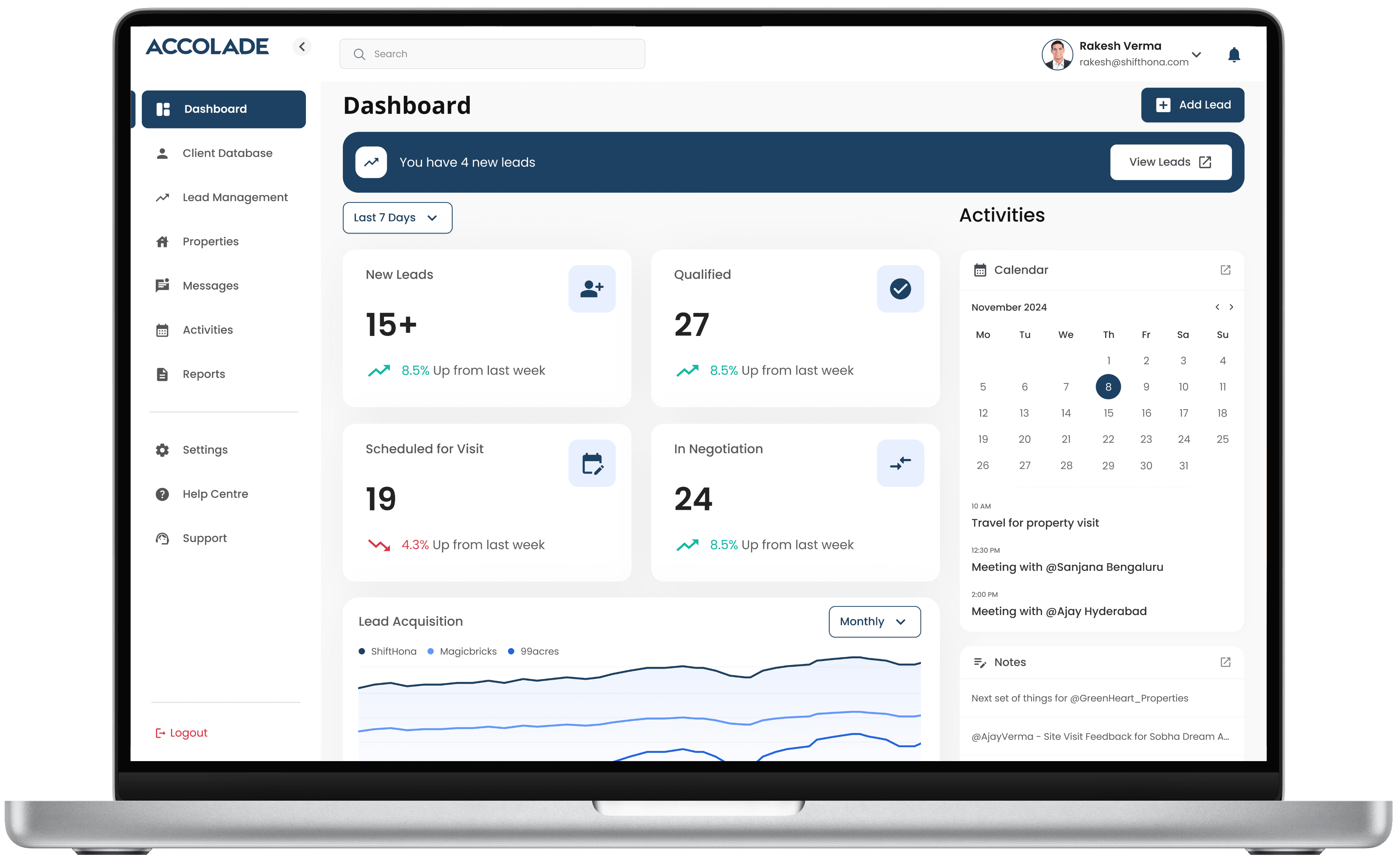
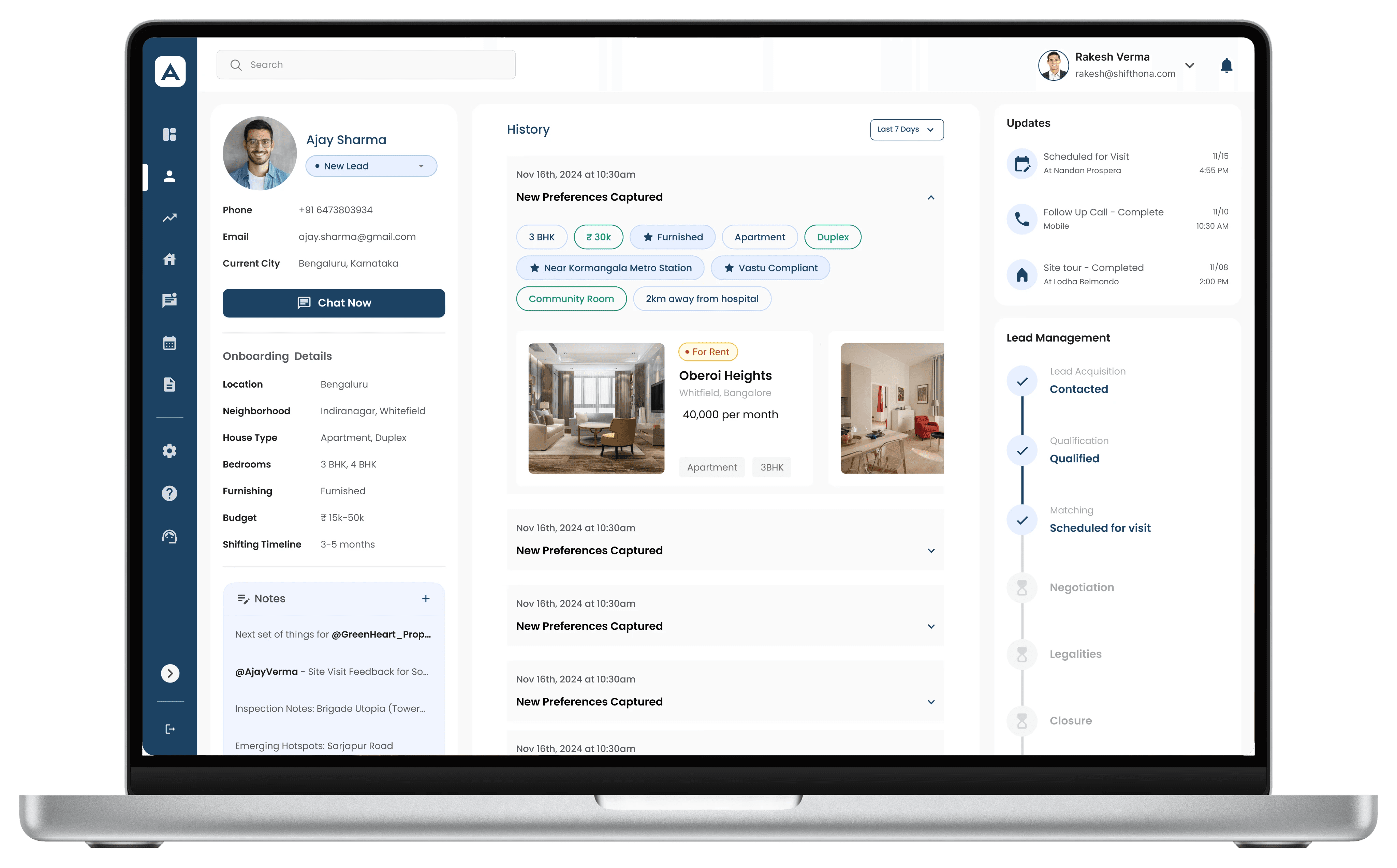
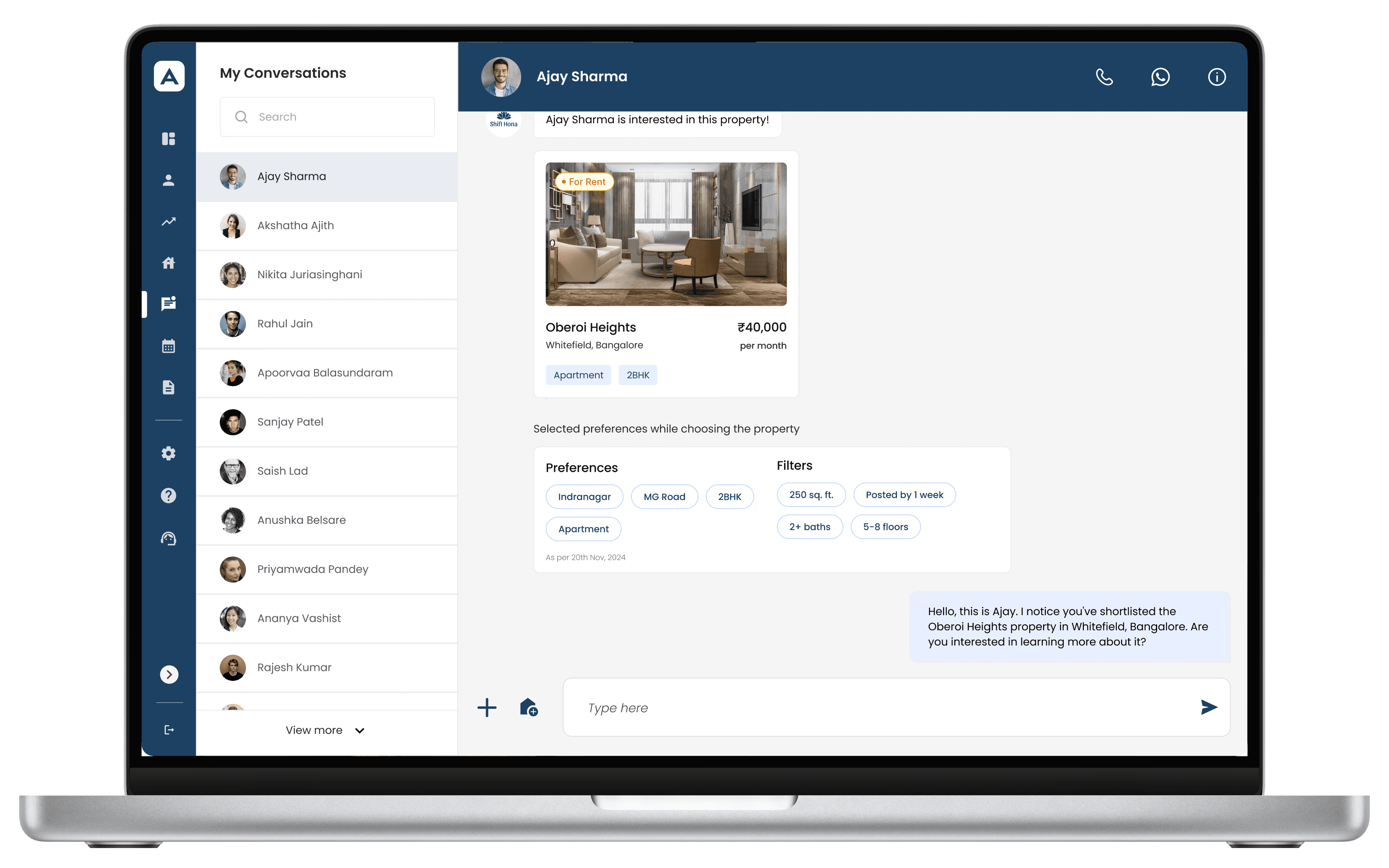
I, along with my student team, designed the Accolade Broker CRM, a centralized workspace that connects client needs with property data in seconds. The dashboard gave them clear visibility into their pipeline, surfaced AI-generated property suggestions instantly, and reduced the need for endless manual searches. The design focused on clarity and speed, giving brokers more time to do what they do best, close deals and help their clients.
Timeline
September- December 2024
Industry
Real Estate
Contribution
Product Design
Team
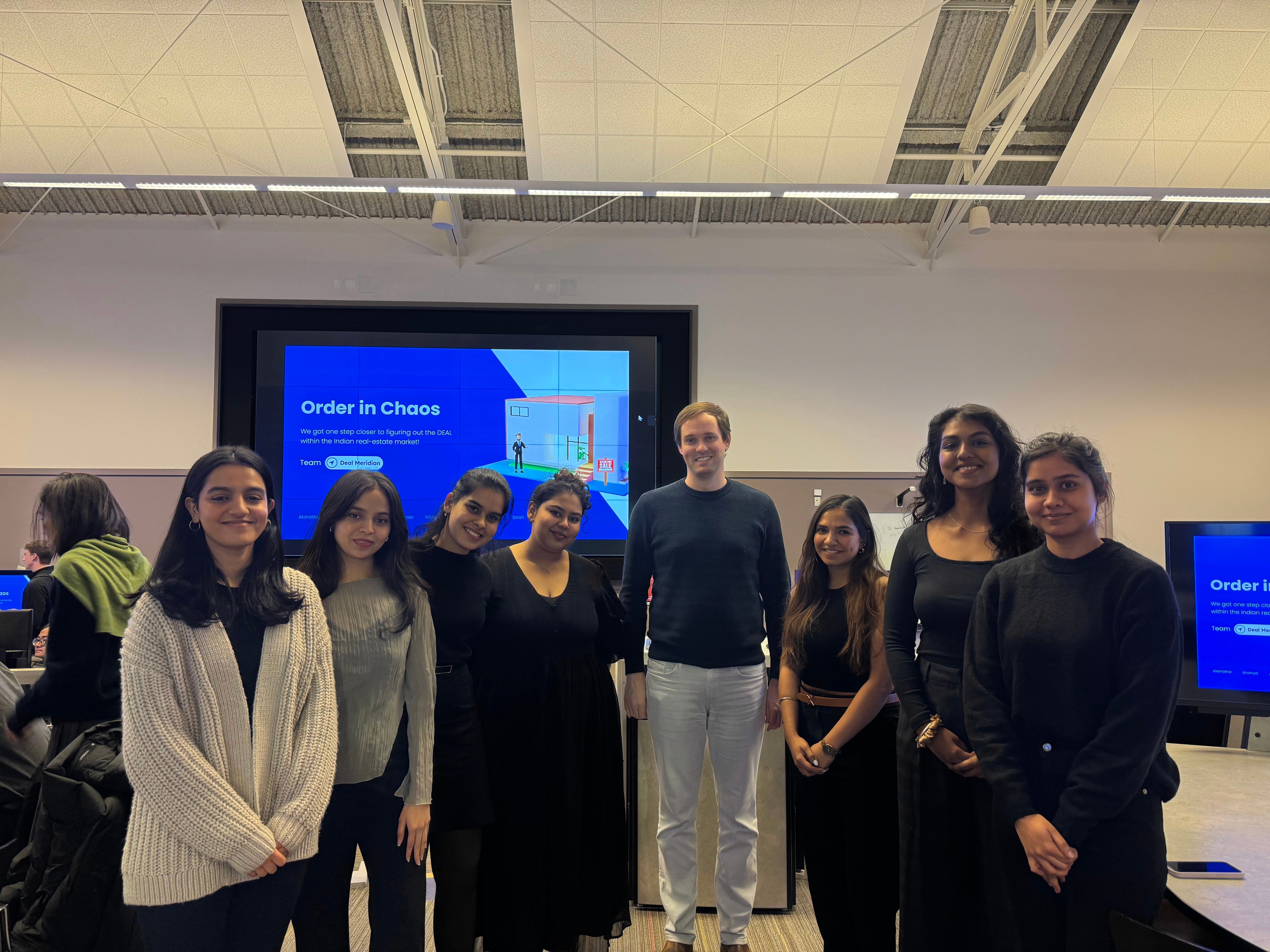
Student team of 8 Designers & Researchers
Founder
Design Researchers
Product Managers
Business SMEs
75%
72%
48%
Metrics and quotes taken from the project’s usability test conducted with Rocket Mortgage clients
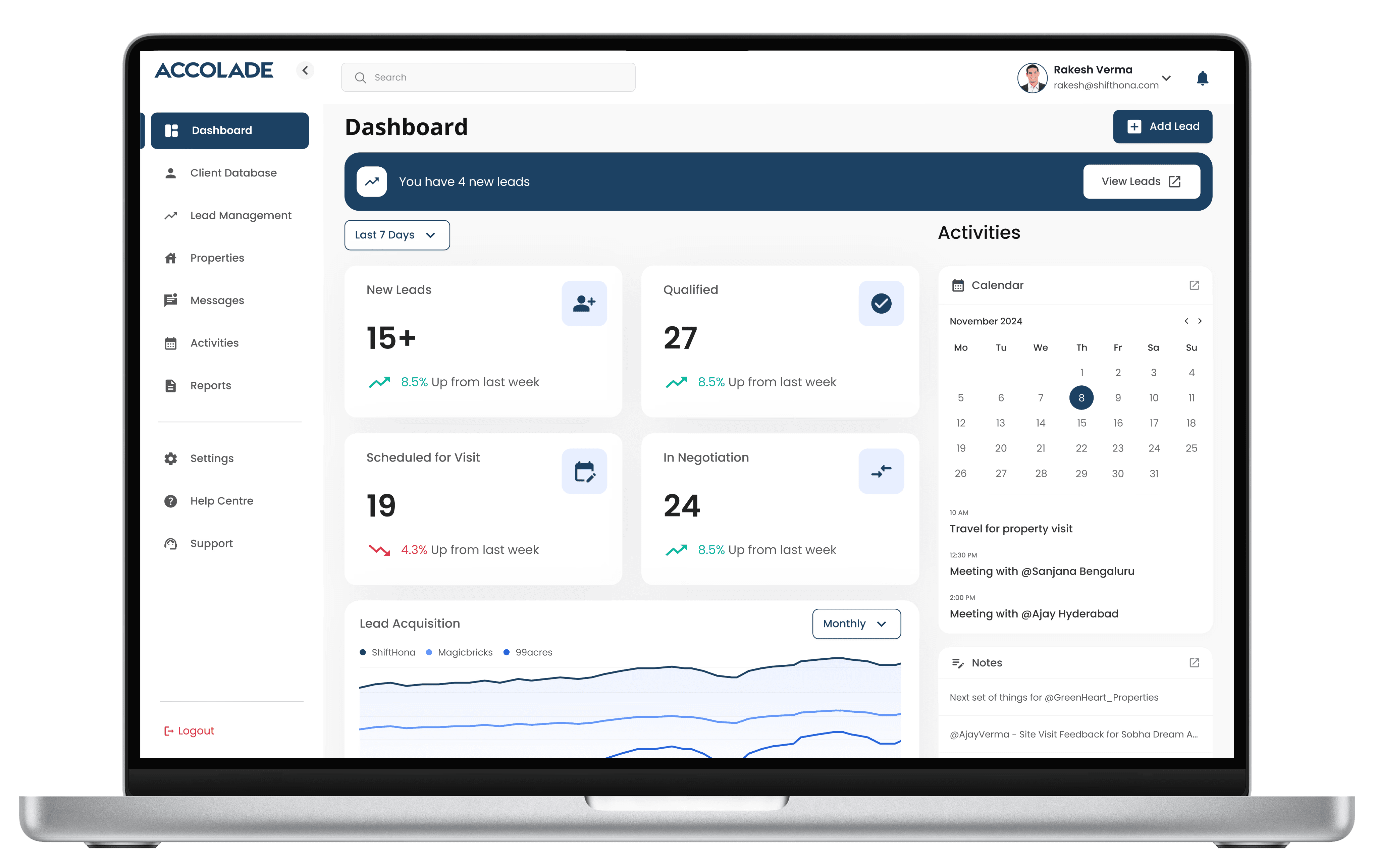
“These metrics on the dashboard can be relevant and useful to me!”
“I like how everything is laid out, it is simple and I can scan it [client details] in one glance.
I feel some details are still missing in the ‘Add Client’ popup. Can I manually add these details about clients too?”
Information Management
Preference Matching
Reflection
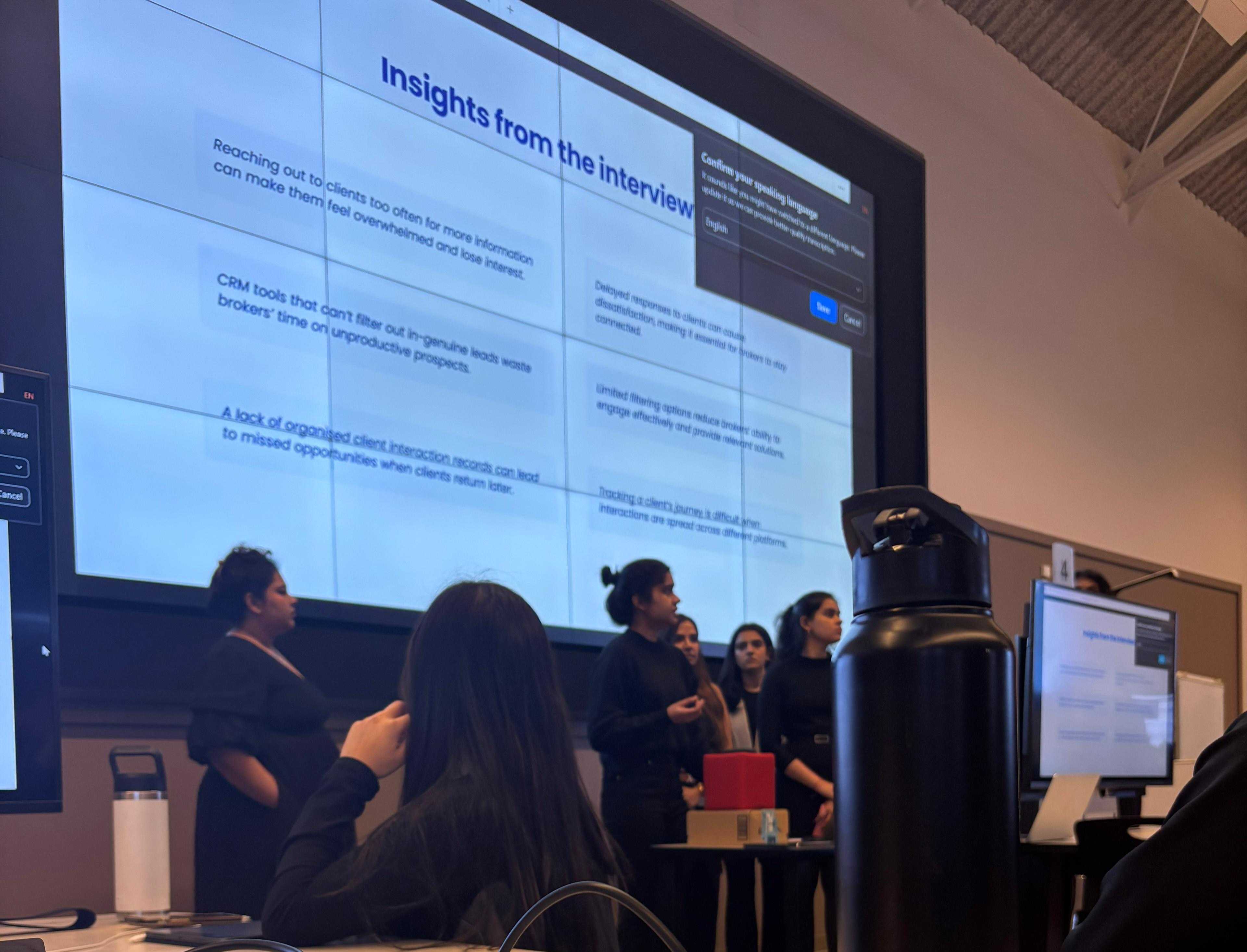
This was the first project where research took center stage, and honestly, it pushed me out of my comfort zone. My previous work had always been more design-centric, so learning to navigate in-depth research methods, and applying them in practice, not just theory, made this project especially memorable.
It was also my first time collaborating with stakeholders based in the US, which meant adapting to new expectations, communication styles, and timelines. Even though the outcome was a proof-of-concept MVP, the experience taught me how to work within a structured six-month project cycle, alongside a cross-functional team of designers and researchers.
Stepping into a new industry, demographic, and process helped me grow into a more well-rounded designer, one who’s equally thoughtful about the why behind the design as the how.