

Personalizing AI guidance across 6.8M+ client conversations
Handed off
Aug 2025
Industry
B2C Fintech
Role
Conversational AI Design Intern
Team
Conversational AI Designers, Product Designers
Problem Space
Rocket's AI assistant treated every homebuyer the same
Rocket’s AI Assistant was giving clients generic guidance when they needed personalized support the most. The lack of relevant guidance and transparency made the experience harder to trust and contributed to lower chat containment.
To understand where the experience was falling short, I reviewed research reports, client reviews, and chat transcripts. Three recurring gaps surfaced across the research, which became the focus of the project.
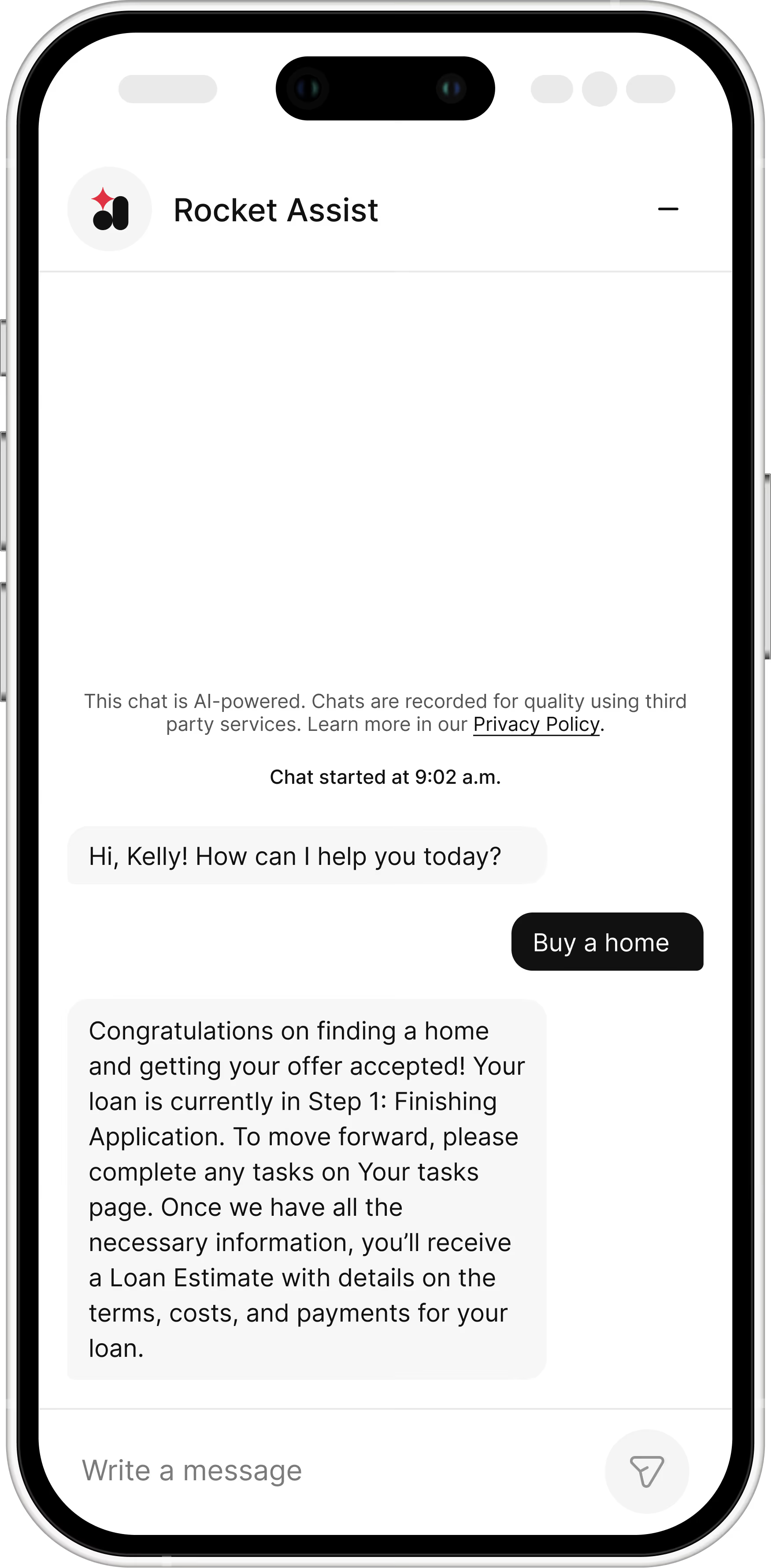
01Everything was text
Answers came as paragraphs with nothing a client could act on.
“It’s an authenticated experience so it should have my data, but this chat history tells me otherwise.”
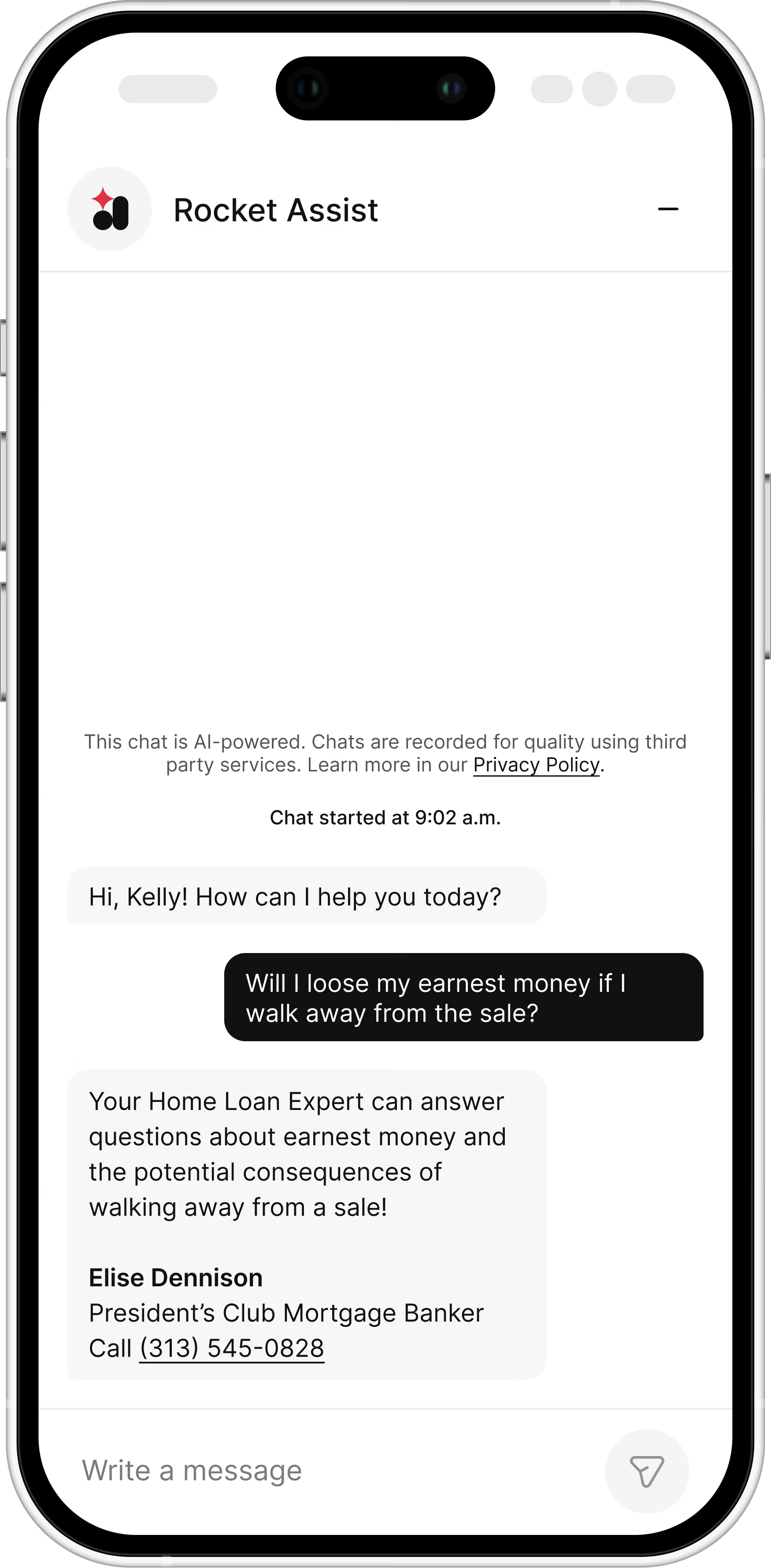
02Every client got the same advice
The chat had their loan data but it still answered like a stranger, with no context retention.
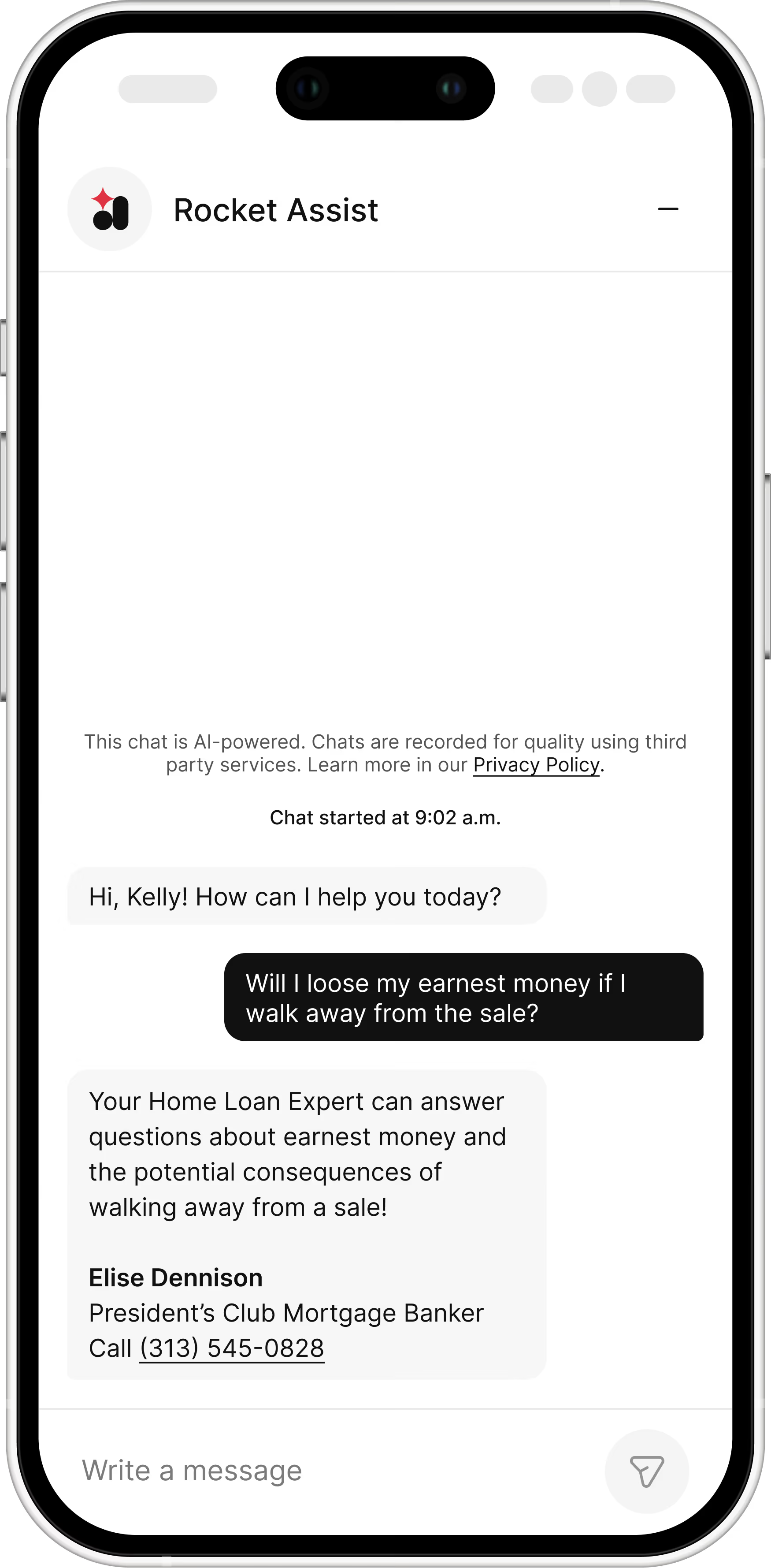
03Asking for a person led nowhere
Clients got a name and a phone number instead of a connection in chat.
Core Flows
What I changed to keep clients in the chat
I wanted more clients to get their answers in the chat and leave satisfied with it. That meant making Rocket Assist personal enough to trust, and giving it interactions such as inspector cards and a handoff wait timer, so it felt like a mature Rocket product.
Move 1: Turning walls of text into answers clients could act on
In the chat transcripts, Rocket Assist answered almost every question with a block of FAQ text. A client asking what an inspection costs needed an estimate for their area and got a paragraph on everything it depends on.
I kept the AI's guidance to a few lines in the message bubble and moved everything else into cards below it. Inspector recommendations became contact-style cards that named the client's realtor as the source, since a shortlist from someone they already worked with was easier to trust than one from the AI. Clients in testing said as much.
Move 2: Using what Rocket already knew about each client
By the time clients reached Rocket Assist, they had already shared their documents, pre-approval and home details with Rocket. The chat still answered like a stranger, so clients stopped trusting it and called their specialist even for basic questions.
I sat with engineers and found a live API already feeding each client's loan stage and home details to their dashboard, which made it the lowest-friction way to personalize the chat. Routine questions could now stay in the chat, leaving specialists more time for the sensitive ones.
Move 3: Handing clients to their specialist without making them start over
Asking for a person got clients a phone number, and the specialist on the other end couldn't see the chat. One client wrote, “I already talked about this in chat, why do I have to repeat it everywhere.”
I routed a request for help straight to the client's purchase specialist inside the chat, with the conversation carried over. If the specialist was busy, the client could wait in the chat or get notified when they were free. Handing off early also helped with trust, since the research reports showed clients grew suspicious when the AI claimed it could help with everything.
Impact
Validating the new experience with the clients
We ran usability testing on the redesign with 8 Rocket clients.
Improved Experience
92%
of clients found the tailored responses were more helpful than the current guidance.
Increased Trust
75%
of clients found sourced recommendations by AI more trustworthy.
Reduced Frustration
96%
of clients noted the proposed handoff flow would reduce frustration.
Testimonials
Feedback from my director and mentor
“This was perhaps her most complex assignment, and Pri quickly mapped key friction points while collaborating with engineers and researchers. Her work helped influence product roadmap priorities.”
 Director of CXD & Digital Product Management
“Driven by curiosity to understand client problems, Pri developed solutions that delivered business value. Her prototypes influenced product strategy, and she collaborated exceptionally across teams.”
Conversational AI Design Manager & MentorReflections
What I'm taking with me from Rocket
No fallback path existed for a mismatched task
Rocket Assist reflected the dashboard's state rather than owning it, so a correction path belonged to that system, not this surface.
I went to engineers and specialists before anyone asked me to
Seeking out engineers, researchers and chat specialists early got me into the conversations that shaped this work most. It's also how I found most of the edge cases.